
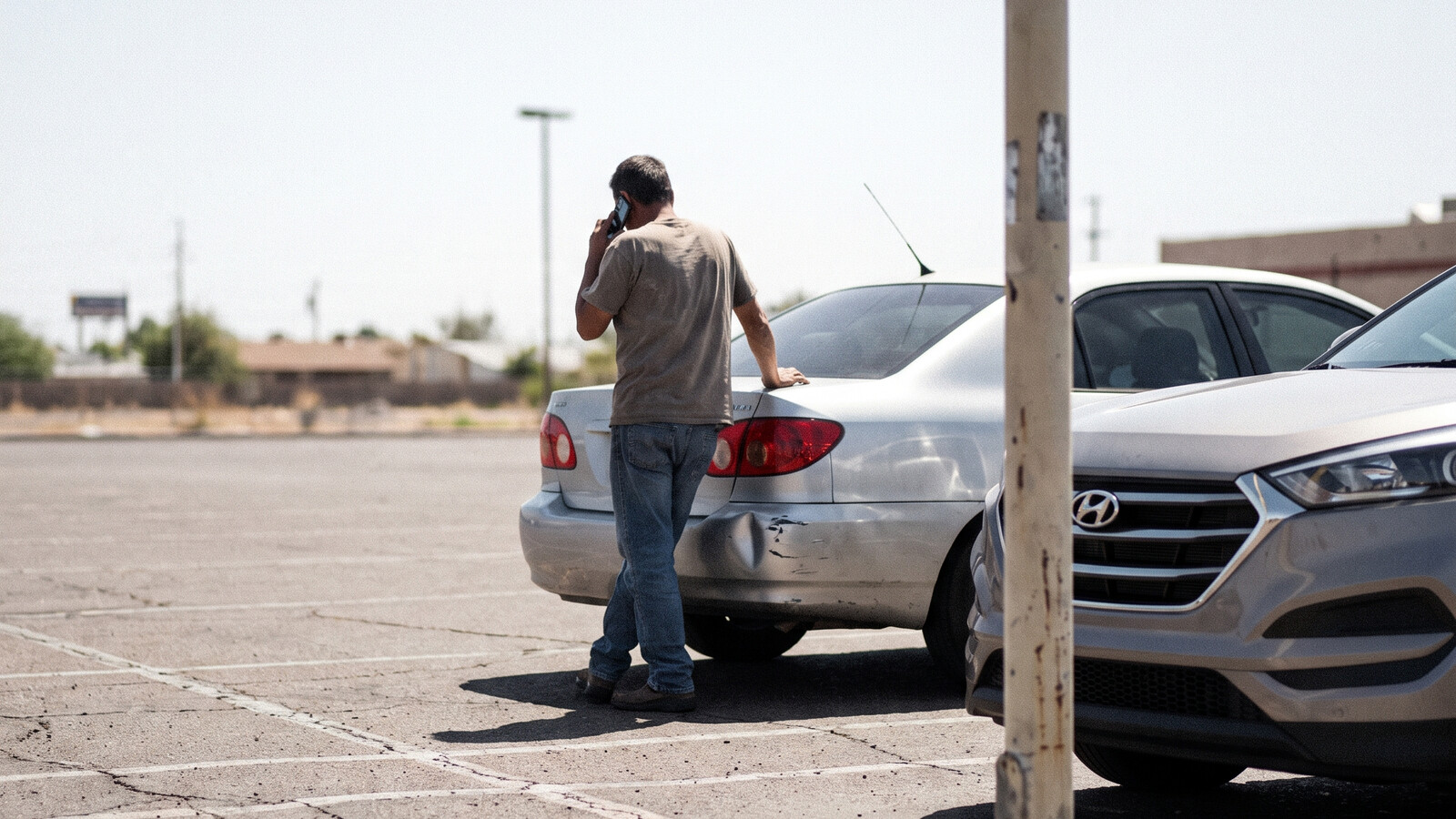
A few days after the crash, an adjuster calls and asks if it is alright to record the conversation. It is presented the way you would ask to put someone on speaker. Just procedure. Just so we have it on file.
It is worth understanding what you are actually being asked.
What a recorded statement is
It is a recorded interview about the accident and your injuries. It gets transcribed, it goes in the claim file, and it does not go away.
Months later, if the details of your case are being argued over, that recording is one of the things your account gets measured against. Your words on day three, given while you were sore and stressed and did not yet know you had a herniated disc, sit alongside your medical records, the police report, and anything you say later on.
It sounds routine, but every word can be compared to your records and your testimony later.
This is not a claim that adjusters are villains. It is a claim about what the document is for. It is a record, created early, by the party paying the claim.
Are you required to give one?
It depends entirely on who is asking, and this is the distinction almost everyone gets wrong.
Your own insurance company
Your policy is a contract, and it almost certainly contains a duty to cooperate. That generally includes reporting the accident and working with your insurer’s investigation. Stonewalling your own carrier can create real problems with your coverage, including with an uninsured or underinsured motorist claim.
So the answer here is usually yes, you have obligations. That still does not mean you have to do it this second, unprepared, on a call you did not know was coming.
The other driver’s insurance company
You have no contract with them. You have no duty to cooperate with them. They can ask, and you can decline.
People agree anyway, usually because declining feels rude or looks like you have something to hide. It is neither. It is the same instinct that makes people say “I’m fine” when they are not.
Why they want it early
Early is when you know the least.
Early is before the MRI. Before you find out the headaches are not just stress. Before you know whether you are missing three days of work or three months. Every honest answer you give in that window is provisional, but the recording is not marked provisional. It is just marked as what you said.
Where these calls get slippery
Usually not through trick questions. Through ordinary ones.
- “How are you doing today?” A greeting anywhere else. Here it is a question about your medical condition, and “good, thanks” is an answer about your injuries.
- “About how fast were you going?” You are being asked to estimate under oath-ish conditions. “I don’t know” is a real answer.
- “About how many car lengths back were you?” Nobody knows this. A guess becomes a fact you are stuck with.
- “Is that everything that hurts?” Asked while you are still being evaluated, this quietly builds a complete-looking list that is not complete.
- “Had you hurt your back before?” A door into your entire medical history.
None of those are unfair questions. They are just questions with more weight than they appear to have, asked at the worst possible time to answer them.
Arizona’s comparative fault rule makes guessing expensive
Arizona follows a pure comparative negligence rule (A.R.S. § 12-2505). Fault gets assigned as a percentage, and whatever share lands on you comes straight out of your recovery.
So an offhand “I guess I could have hit the brakes sooner” is not modesty. It is a number. Do not estimate, do not speculate, and do not fill silence. If you do not know, say you do not know.
What to do instead
- Ask who you are speaking with and which insurance company they represent. Yours or theirs changes everything.
- You can decline the other driver’s insurer. “I’m not ready to give a recorded statement” is a complete sentence.
- You can postpone. Even with your own carrier, asking to schedule it is normal.
- Do not do it while you are still figuring out your injuries.
- Talk to a lawyer first if you can. Not because it is a trap, but because you only get to do this once and they do it every day.
If you already gave one
It is not a disaster, and it is not the end of your claim. People give recorded statements all the time and go on to resolve their cases perfectly well.
But it is worth telling your attorney exactly what you said, as best you remember, including the parts you are not proud of. It is much easier to deal with something known early than to be surprised by it later.
The short version
Find out whose insurer is calling. If it is theirs, you can say no. If it is yours, you probably have to cooperate, but not right now and not unprepared. And whoever is asking, do not guess about speed, distance, fault, or how hurt you are.
You are allowed to pause and ask questions first.
For the bigger picture, here is how Joseph handles Phoenix car accident claims from the first call to the end of the case.